
8 Signs You Might Have Bed Bugs in Your Atlanta Home — What to Look For
The early warning signs that most people miss before a full infestation establishes.
Quick Answer
The earliest signs of bed bugs in an Atlanta home include unexplained bites on waking, rust-colored stains on mattress seams or pillowcases, and dark fecal spots along baseboards or headboard joints. Shed exoskeletons near sleeping areas or a faint sweet musty odor in the bedroom confirm an active infestation. If you notice any of these signs, schedule a free inspection immediately.
Most Atlanta residents who call us for an inspection have been living with a developing infestation for weeks or months before they recognized what was happening. Bed bugs are nocturnal, rarely seen in daylight, and their early signs are easy to misattribute to other causes. By the time bites are numerous and obvious, the infestation is typically well established.
Catching bed bugs early produces dramatically better outcomes. An infestation of 5 to 10 adults is far easier and cheaper to eliminate than an infestation of several hundred. This guide covers all 8 early warning signs, explains which ones are harder to detect in Atlanta’s specific housing stock, and tells you when to stop trying to diagnose the situation yourself and call a professional.
Sign 1: Unexplained Bites on Waking
Waking up with small, itchy red bumps that were not there when you went to sleep is the first sign most people notice. Bed bug bites typically appear in a line or cluster, often in a pattern sometimes described as “breakfast, lunch, and dinner.” Common locations include the arms, shoulders, neck, and any exposed skin during sleep.
The challenge with bites as a diagnostic sign is that not everyone reacts to bed bug bites. Some people show no skin reaction at all, even with a significant infestation. Others react severely. And many other insects, including mosquitoes, fleas, and spider mites, can produce similar-looking skin reactions. Bites alone are not confirmation of bed bugs. They are a trigger to look for the other physical signs described below.
In Atlanta’s dense apartment buildings in Midtown and Old Fourth Ward, where units are separated by thin shared walls, unexplained bites can sometimes be the result of an infestation in an adjacent unit that has not yet spread fully into yours. This makes early inspection even more valuable, as catching the infestation at the unit boundary is far easier than addressing a building-wide spread.
Sign 2: Rust-Colored Stains on Mattress Seams or Pillowcases
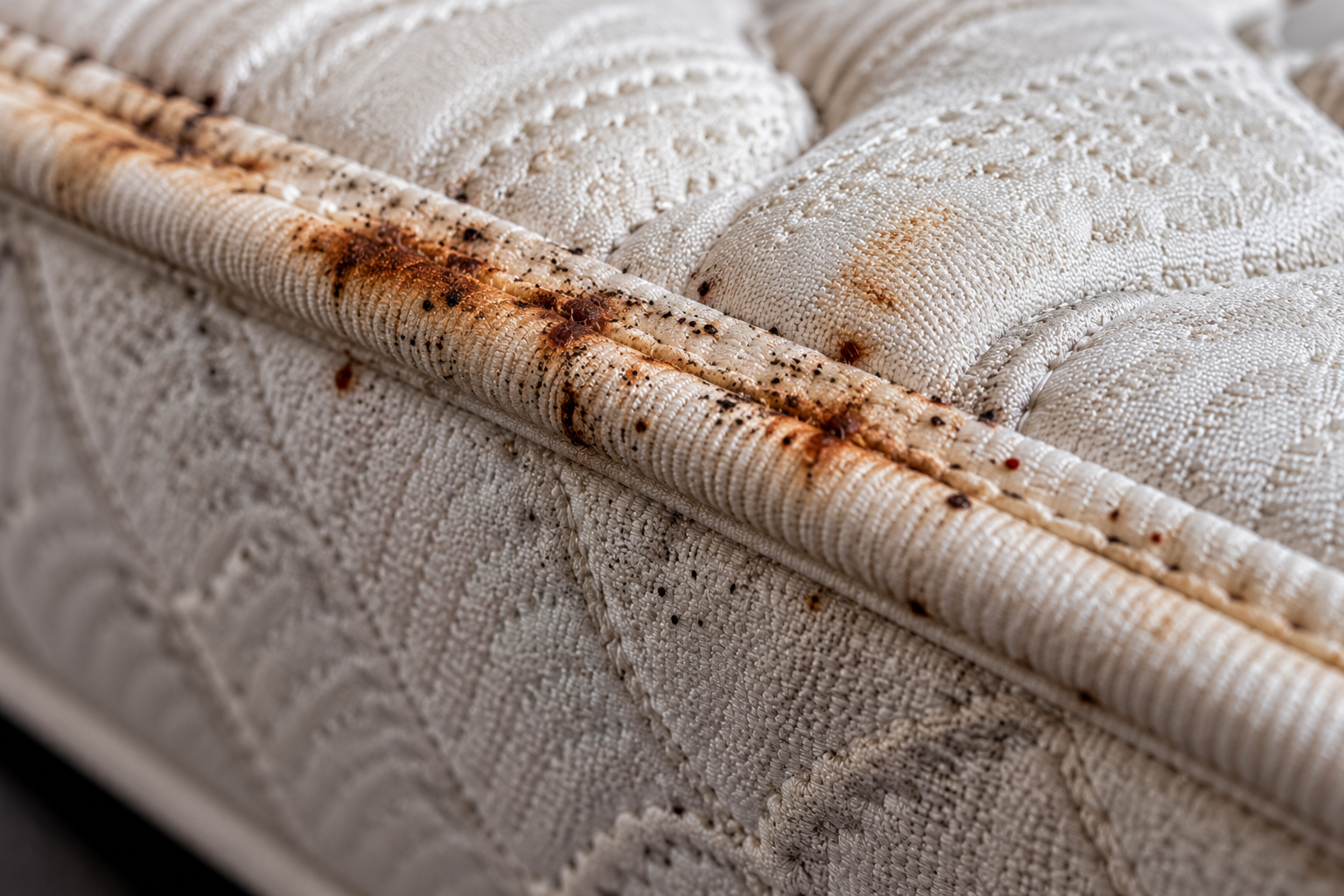
Small rust-brown stains on your mattress, particularly along the seams, or on your pillowcases are one of the most reliable early indicators. These stains occur when a feeding bed bug is accidentally crushed, leaving a bloodstain, or when a recently fed bed bug excretes digested blood. Both produce the same rust-brown discoloration.
These stains are small, typically the size of a period or a small ink mark. They are easy to overlook unless you are specifically looking for them. If you find stains on your mattress seams that you cannot explain, strip the bed, examine every seam carefully with a flashlight, and check your pillowcases in the same light. Finding stains in multiple locations increases the likelihood of an active infestation significantly.
In Atlanta’s older converted properties in Inman Park and Cabbagetown, where original hardwood floors and deep crown moldings create additional hiding locations, stains on baseboards and picture rail moldings are also worth looking for, not just on bedding.
Sign 3: Tiny Dark Fecal Spots Along Baseboards or Mattress Seams
Bed bug fecal matter appears as small dark spots, approximately the size of a pen tip, usually found along mattress seams, at headboard joints, behind baseboards, along electrical outlet edges, and at crevices in furniture near the bed. These spots are composed of digested blood and dry to a dark brown or black color. They do not wipe away cleanly like a normal spot. They tend to smear slightly when a damp cloth is applied.
Finding a cluster of these spots in a specific location, such as the fold of a mattress seam or behind a headboard bracket, is a strong indicator of an active harborage point. Fecal spots confirm that bed bugs have been spending time in that location regularly, not just passing through.
Sign 4: Shed Exoskeletons Near Sleeping Areas
Bed bugs shed their outer shell (exoskeleton) five times as they progress from nymph to adult. These shed skins are translucent to pale brown and retain the shape of the bed bug. They are hollow and papery. Finding them near your sleeping area, particularly in mattress seams, in crevices of the bed frame, or at baseboards near the bed, is a clear sign of an active or recent infestation.
Shed skins are less subject to the variability of biting reactions. Everyone who has an infestation has shed skins, regardless of whether they react to bites. Finding shed skins is one of the most reliable non-live-bug indicators available to a homeowner doing their own preliminary check.
Sign 5: Sweet Musty Odor in the Bedroom
A faint, sweet musty odor in the bedroom, sometimes described as smelling like overripe raspberries or coriander, is produced by large numbers of bed bugs through their scent glands. This odor is typically not detectable in the early stages of an infestation and becomes noticeable only when a significant population has established.
If you notice an unusual smell in your bedroom that is not explained by the normal sources you can identify, it is worth investigating the other signs on this list. The smell alone is not diagnostic, but combined with other signs, it is meaningful.
Sign 6: Live Bugs in Mattress Seams or Box Spring Folds
Adult bed bugs are visible to the naked eye. They are flat, oval, and approximately the size of an apple seed when unfed. After feeding they become more elongated and reddish-brown. Nymphs are smaller and may be nearly translucent. Finding a live bug in your mattress seam, box spring, or anywhere near your sleeping area is confirmation of an infestation. No further diagnosis needed. Call for treatment immediately.
Sign 7: Blood Smears on Pillowcases
Waking up with small blood smears on your pillowcase, distinct from the rust-brown dried stains described above, often indicates that you rolled over and crushed a feeding bed bug during sleep. This is a different type of evidence than dried fecal spots and tends to appear in the early stages of an infestation when bugs are still feeding close to the surface rather than retreating deep into harborage after each feeding.
Sign 8: Eggs or Egg Casings in Furniture Crevices
Bed bug eggs are white, about 1 millimeter long, and often found in clusters in deep crevices. They are sticky when freshly laid and adhere to surfaces. Empty egg casings (after hatching) appear as translucent white shells. Finding eggs or egg casings in headboard crevices, behind drawers, or in the joints of upholstered furniture confirms reproductive activity and indicates the infestation has been established long enough for multiple generations to develop.
Bed Bug Bites vs. Other Insect Bites: How to Tell the Difference
Atlanta homes host several insects that bite, including mosquitoes, fleas, and spider mites, and it is important to know how to differentiate between them and bed bugs. The key differences:
- Bed bug bites: appear in lines or clusters, typically on exposed skin during sleep, present on waking, no bite felt at the time
- Mosquito bites: appear immediately and are usually individual welts, not in lines, more likely to appear on outdoor-exposed skin
- Flea bites: typically concentrated on ankles and lower legs, appear in groups, associated with pet ownership
- Spider bites: usually singular, may have a central puncture mark, and spiders bite defensively when disturbed, not as a feeding pattern
The pattern and timing of bites matters. If bites consistently appear overnight on exposed upper body skin with no other identified cause, bed bugs are the most likely explanation. But bites alone are never enough. Look for the physical evidence described in the signs above before concluding.
When to Stop DIY Checking and Call a Professional
If you have found any of the physical signs described above (stains, fecal spots, shed skins, eggs, or live bugs), stop your own checking and call a professional. Continued disturbance of the mattress and sleeping area without treatment causes bed bugs to scatter and establish secondary harborage points throughout the room, making subsequent treatment more difficult.
If you have bites but cannot find any physical evidence after a careful check, a professional inspection is still warranted. Some infestations are small enough that the physical evidence is present but requires specialist tools and experience to locate. A free inspection takes 30 to 60 minutes and provides a written report confirming whether an infestation is present. There is no downside to getting the inspection. Call (404) 678-9427 or see our bed bug inspection page for details.
For more on what happens after the inspection and how treatment works, see our bed bug removal page. The EPA’s bed bug identification guidance is also a reliable reference for visual identification.
FAQ: Signs of Bed Bugs in Atlanta
The most reliable way to confirm bed bugs is to find physical evidence in the sleeping area, not to rely on bites alone. Check your mattress seams, headboard, and baseboards for dark fecal spots, shed skins, or live bugs. If you find physical evidence alongside bites appearing on waking, the diagnosis is almost certain. If you only have bites with no physical evidence, a professional inspection is the right next step rather than trying to self-diagnose from bites alone.
Yes. An estimated 30 to 70 percent of people do not produce a noticeable skin reaction to bed bug bites. Some people share a bed with someone who is getting bitten while experiencing no reaction themselves. If another household member is getting bites but you are not, bed bugs can still be present in the mattress and sleeping area. The physical evidence check described in this article applies regardless of whether you are experiencing bites personally.
Yes. Older Atlanta homes with original hardwood floors and deep wall voids, such as Craftsman bungalows in Grant Park or Inman Park, have significantly more potential hiding spots than newer construction. A homeowner checking for bed bugs in one of these properties may not find evidence that a trained technician would locate with proper tools and knowledge of the construction type. This is not a reason to skip the self-check, but it is a reason not to rely solely on your own inspection as a definitive negative result.
Call a licensed pest control professional for an inspection immediately. Do not start spraying over-the-counter products, which can scatter bed bugs to new locations and make treatment more difficult. Do not throw away your mattress or furniture, as moving infested items through your home spreads the infestation. Do not move items to a neighbor’s place or a storage unit without treating them first. Call (404) 678-9427 for a same-day free inspection throughout the Atlanta metro area.
See Any of These Signs? Get a Free Inspection Today.
Same-day response available throughout Atlanta and all communities within 50 miles. Written report provided.




One Comment